 By
The psychological toll of frequent business travel often hits hardest not in the boardroom, but in the hotel mirror. You pack your bags for a four-day conference or a week of client meetings, and an immediate sense of dread sets in regarding your physique. After months of meticulous meal preparation, structured progressive overload, and consistent sleep schedules, stepping onto an airplane feels like an express ticket to muscle loss.
Many dedicated lifters make the mistake of adopting an all-or-nothing mindset on the road. They assume that if they cannot perform their exact barbell program or hit every macronutrient gram with laboratory precision, their trip is a write-off. Others drive themselves into exhaustion trying to track down boutique gyms at six in the morning before a twelve-hour workday, only to burn out by mid-week.
The reassuring physiological reality is that maintaining hard-earned muscle requires far less effort than building it. True muscular atrophy does not occur overnight, nor does it happen over the course of a routine business trip. By understanding the foundational levers of muscle preservation and adapting your habits to hotel environments, you can travel for work regularly without sacrificing a shred of lean tissue.
The Physiology of Maintenance: Volume vs. Intensity
To survive a busy travel schedule without losing progress, you must separate the stimulus required to build new muscle from the stimulus required to keep what you already have. Hypertrophy demands progressive overload, high training volumes, and consistent caloric surpluses. Muscle preservation, by contrast, operates on a minimum effective dose.
Biomechanical and physiological evidence shows that you can maintain existing muscle mass on roughly one-third to one-half of your normal training volume, provided you keep your intensity high. If your standard routine involves fifteen weekly sets for chest or quadriceps, you can preserve those muscles during a travel stint with as few as four to six challenging sets across the entire week.
The non-negotiable factor is proximity to muscular failure. When total workout volume drops and external weights are lighter than what you normally lift at home, every working set must be taken close to mechanical failure. Lifting lighter weights for higher repetitions signals your central nervous system that the tissue is still mechanically essential to your survival. If you stroll through a lazy twenty-minute hotel workout without pushing your muscles to produce genuine effort, your body has little reason to maintain energetically expensive muscle tissue.
Mastering the Modest Hotel Gym
Most hotel fitness centers are an afterthought. They typically feature a row of aging treadmills, a broken elliptical, a single adjustable bench, and a rack of chrome dumbbells that tops out at fifty pounds. Rather than lamenting the lack of a power rack or heavy barbells, treat the hotel gym as an exercise in creative mechanical tension.
Prioritizing Unilateral Movements
When external load is limited, bilateral compound exercises lose much of their utility. A pair of fifty-pound dumbbells will do very little to challenge a lifter accustomed to squatting three hundred pounds. The immediate solution is to shift your focus to unilateral training.
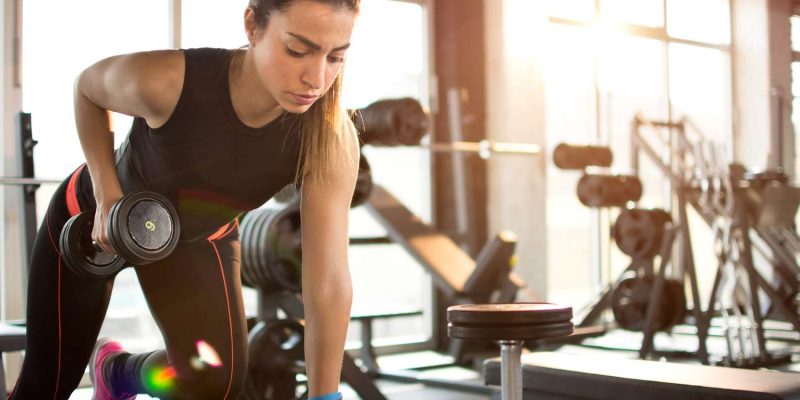
Moving to single-leg and single-arm movements instantly doubles the relative load on the working muscle while challenging your core and stabilizer muscles. Exercises like the Bulgarian split squat, single-leg Romanian deadlift, and walking lunges can bring your quads, glutes, and hamstrings to true muscular failure using relatively light dumbbells. For the upper body, single-arm dumbbell floor presses, three-point rows, and unilateral overhead presses demand significant shoulder stability and high muscle activation without requiring heavy plates.
Manipulating Cadence and Rest Periods
When you cannot increase the weight on the bar, you must change how you apply that weight to the muscle fiber. You can dramatically elevate muscle recruitment by altering rep tempo and density:
-
Emphasize slow eccentric phases. Lower the weight under strict control over three to four seconds on every repetition. This accentuates eccentric muscle damage, a primary driver of retention signals.
-
Introduce isometric pauses. Pausing for two full seconds at the point of maximum stretch, such as the bottom of a split squat or the contracted peak of a dumbbell row, strips away momentum and forces the muscle to contract harder.
-
Shorten rest intervals. Keeping rest periods between forty-five and sixty seconds maintains metabolic stress, forcing high motor-unit recruitment despite modest loads.
The Zero-Equipment Hotel Room Protocol
There will be travel days when a late flight, early breakfast meeting, or nonexistent fitness facility makes stepping into a gym impossible. That is no excuse to surrender the day. A focused twenty-minute bodyweight session directly on the carpet of your hotel room provides more than enough stimulus to ward off muscle breakdown.
To make bodyweight work effective for muscle retention, standard push-ups and air squats will not suffice; you must use advanced variations that produce genuine mechanical strain.
For the chest, shoulders, and triceps, utilize deficit push-ups by elevating your hands on sturdy luggage or hotel chairs to allow a deep stretch at the bottom of the movement. Elevating your feet onto the hotel bed shifts tension forward into an inverted press, loading the upper chest and anterior deltoids. For the lower body, perform high-rep single-leg pistol squats onto the edge of the mattress or elevate your shoulders on the bed for single-leg hip thrusts.
Packing a single high-tension resistance band in your carry-on luggage takes up negligible space while opening the door to face pulls, standing rows, overhead presses, and bicep curls. A dense twenty-minute circuit performed with zero rest between non-competing exercises delivers a potent systemic signal to retain lean mass while doubling as an energizing wake-up routine before your morning meetings.
Nutritional Defenses: Protecting Muscle on the Road
Training provides the stimulus, but nutrition provides the raw materials. When traveling, physical muscle loss is rarely caused by missed gym sessions; it is caused by prolonged nutritional neglect.
The Anchor of Daily Protein Intake
When traveling for business, your overall caloric intake is prone to extreme swings. Long transit times can plunge you into an unintentional caloric deficit, while lavish dinners with clients can catapult you into an excessive caloric surplus. Amid this volatility, your primary defensive priority must be hitting your baseline protein target.
Aim to consume roughly 0.8 to 1.0 grams of protein per pound of body weight each day. Protein stimulates muscle protein synthesis, offsets the catabolic effects of travel-induced stress, and provides satiety to keep you from grazing on processed airport snacks.
Make protein the non-negotiable anchor of every meal. When ordering at restaurants, build your plate around the largest, leanest cut of meat, poultry, or fish available before considering side dishes. Pack a shaker bottle containing two to three pre-portioned servings of whey or plant-based protein powder in your luggage. Having high-quality protein readily available eliminates the emergency panic of scouring an airport terminal for something other than pastries and chips.
Navigating Client Dinners and Alcohol
Business travel frequently centers around entertaining clients, multi-course dinners, and open bars. You do not need to sit awkwardly sipping tap water to maintain your physique, but you must be strategic.
Alcohol is notoriously disruptive to muscle retention. It impairs nocturnal protein synthesis, suppresses rapid eye movement sleep, elevates resting heart rate, and dehydrates muscle cells. If you choose to drink, limit yourself to one or two servings of neat spirits or dry wine, paired with a full glass of water for every drink consumed.
At the dinner table, prioritize grilled, baked, or broiled proteins, double up on green vegetables, and treat rich sauces, dressings, and bread baskets as optional garnishes rather than staples. Conserving your carbohydrate and fat intake during the day gives you a caloric buffer that accommodates the richer meals typical of evening business functions.
Neutralizing the Silent Threat: Sleep and Hydration
The most overlooked aspect of traveling for work is systemic stress. Flying in pressurized cabins causes rapid fluid loss, while shifting time zones and unfamiliar hotel rooms elevate the stress hormone cortisol, which actively promotes muscle breakdown when elevated over multiple consecutive days.
When muscle feels soft or depleted after travel, it is rarely muscle loss; it is almost always intracellular dehydration and glycogen depletion. Dehydrated muscle tissue loses volume, appearing flat and weak. Counteract this by drinking at least half a liter of water for every hour spent in transit, supplementing with an electrolyte packet containing sodium, potassium, and magnesium to keep your fluid balance stable.
Prioritize sleep hygiene in your hotel room with the same diligence you apply to your workouts. Keep the room temperature cold, between sixty-five and sixty-eight degrees, use blackout curtains to eliminate street light, and avoid working on laptops directly in bed immediately before trying to sleep. A single night of deep, restorative rest does more to protect your lean mass and balance anabolic hormones than an hour of frantic, exhausted exercise ever could.
Staying Consistent on the Road
Maintaining muscle during corporate travel is not about achieving athletic perfection; it is about establishing a high baseline floor that prevents regression.
Stop viewing business trips as disruptions to your fitness routine and start treating them as an exercise in tactical efficiency. By condensing your training into high-intensity unilateral work, anchoring your daily diet with adequate protein, and guarding your hydration and sleep, you can travel continuously for work while keeping your physique sharp, strong, and resilient.
What is your reaction?
Excited
0
Happy
0
In Love
0
Not Sure
0
Silly
0